


Smart Budgeting for Your Used Car in Everett: Beyond the Monthly Payment
Used Car Budget Everett
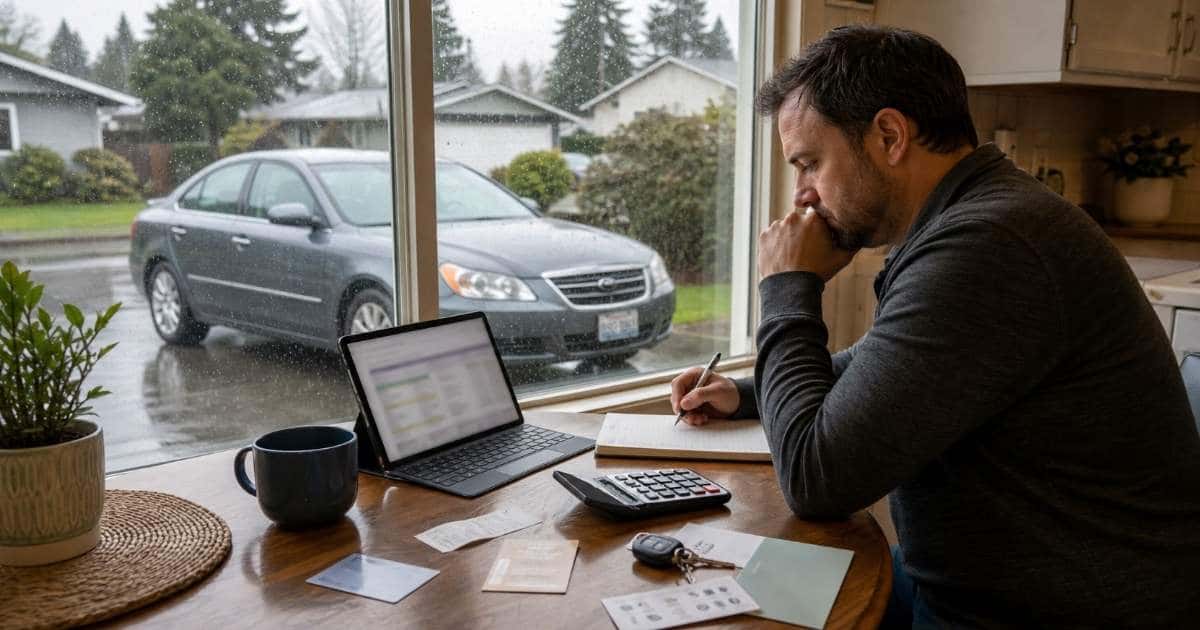
A smart used car budget includes the payment, insurance, fuel, taxes, registration, maintenance, and a repair cushion.
This guide walks Everett shoppers through the full cost picture before they choose a vehicle or financing path.
Payment
The number most shoppers notice first, but not the only number that matters.
Insurance & Fees
Coverage, taxes, title, registration, and annual tabs should be planned before purchase.
Fuel & Maintenance
MPG, tires, oil changes, brakes, and wet-weather upkeep can change the real monthly cost.
Repair Reserve
A small monthly cushion can keep unexpected repairs from turning into a financial crisis.
Why the Monthly Payment Is Only Part of Your Used Car Budget in Everett
A car payment gets you into the vehicle. It doesn’t keep it running, insured, fueled, or legally registered. Buyers who plan only around that number often find themselves stretched thin within the first few months. True total cost of ownership includes insurance, registration fees, taxes, fuel, and routine maintenance, plus the occasional unexpected repair.
Building a complete budget isn’t complicated. It just requires looking a little further down the road before you sign anything. Factor in all the costs upfront and you can confidently identify which used cars in Everett actually fit your financial situation, not just your optimism.
Washington State Taxes, Title, and Registration Fees
Washington State charges sales tax on used vehicle purchases, and the rate applies to the full purchase price. Depending on where you live in Snohomish County, local jurisdiction taxes may layer on top of the state rate. On a $12,000 vehicle, sales tax alone can add over $1,000 to what you owe at closing.
Title transfer fees and registration costs apply when you bring a vehicle into your name. Registration fees in Washington are calculated based on multiple factors including vehicle weight, location, and taxes, and they renew annually. Before you commit to any purchase, request a complete breakdown of all transaction fees from the dealer or the Washington Department of Licensing so there are no surprises at the finance desk.
Auto Insurance Costs for Used Car Buyers in Everett
Washington State requires all drivers to carry minimum liability coverage of 25/50/10 (bodily injury and property damage), but most lenders require comprehensive and collision coverage when you’re financing. That combination can significantly increase your monthly insurance cost.
Premiums vary based on your driving history, age, the specific vehicle, and deductible levels. A driver with a clean record and a mid-size sedan will pay far less than a driver with recent violations in a performance vehicle. Before you fall in love with a specific car, pull insurance quotes for that exact make, model, and year. Some vehicles also qualify for discounts tied to safety ratings or anti-theft features, and those savings over a few years can tip the scales between two comparable options.
Start With a Budget, Then Shop With Confidence
CarHop of Everett helps shoppers compare used vehicles with flexible financing options and clear next steps. You can start your approval online, then browse inventory with your full budget in mind.
Fuel and Maintenance Costs by Vehicle Type
Fuel is one of those costs that sneaks up on buyers focused on the sticker price. The math is straightforward: divide your monthly mileage by the vehicle’s MPG and multiply by the local gas price. If you drive 1,000 miles per month at 25 MPG with gas at $4.00 per gallon, that’s roughly $160 per month. Drop to 18 MPG and that figure climbs to nearly $220. Over a year, the gap exceeds $700. Commuter routes in and around Everett, especially along I-5 or Highway 2, make this calculation well worth doing before you shop.
The table below compares common used vehicle types across the cost categories that matter most for budgeting:
| Vehicle Type | Typical MPG (Combined) | Insurance Tier | Maintenance Cost Level | Cargo/Utility |
|---|---|---|---|---|
| Compact Sedan | ~30–35 | Lower | Lower | Limited |
| Midsize Sedan | ~25–30 | Lower–Mid | Lower–Mid | Moderate |
| Compact/Midsize SUV | ~22–28 | Mid | Mid | High |
| Full-Size Truck | ~17–22 | Mid–High | Higher | Very High |
| Hybrid Sedan | ~40–50 | Mid | Mid (battery factor) | Moderate |
Routine Maintenance and Tires
Every vehicle has a manufacturer-recommended service schedule covering oil changes, brake inspections, and fluid services. A practical approach is setting aside a fixed monthly amount into a maintenance fund to smooth out irregular expenses. Some months nothing comes due; others bring an oil change, a brake job, and a filter replacement all at once.
Tires are one of the larger periodic expenses any used car owner faces. Everett’s wet winters, occasional ice, and temperature swings accelerate wear. A quality set of four can run $400 to $800 or more depending on size and brand. Building that into your ownership budget prevents the cost from feeling like a crisis when it arrives.
Building an Emergency Repair Reserve
No matter how solid the vehicle, unexpected repairs happen. Setting aside even a modest monthly amount creates a cushion that keeps a repair bill from becoming a debt spiral. Fixing problems promptly almost always costs less than waiting, so a funded reserve pays for itself over time.
How to Build a Realistic Total-Cost Budget Before You Shop
Shopping with a complete budget transforms the experience. Instead of reacting to whatever payment is presented, you walk in knowing your numbers. We encourage every buyer we work with to run through this kind of framework before visiting our lot. You can also browse our used vehicle inventory to get a realistic sense of price ranges as you set your targets.
Sample Monthly Budget Worksheet
The example below uses round numbers for illustration. Replace them with your actual figures to find your true ceiling.
| Budget Category | Example Amount |
|---|---|
| Monthly take-home income | $3,500 |
| Fixed household expenses (rent, utilities, groceries, etc.) | $2,200 |
| Remaining after household expenses | $1,300 |
| Recommended car-budget ceiling (~30–35% of remaining) | ~$400–450 |
| Target car payment | $250 |
| Estimated insurance (monthly) | $100 |
| Estimated fuel (monthly) | $160 |
| Maintenance reserve (monthly) | $50 |
| Emergency repair reserve (monthly) | $30 |
| Registration set-aside (monthly) | $20 |
| Total monthly ownership cost | ~$610 |
Financing Term and APR: What the Numbers Actually Mean
The financing term shapes everything downstream. Consider a $12,000 amount financed at 12% APR: a 48-month term produces a higher monthly payment but roughly $3,100 in total interest. Stretch that same amount to 72 months and the monthly payment drops, but total interest climbs to approximately $4,700. That’s an extra $1,600 paid just to lower the monthly number. These figures are illustrative, not a quote from us, but the pattern holds across most financing structures.
A larger down payment or a trade-in reduces the amount financed, which lowers both the payment and total interest. For buyers with credit challenges who may encounter higher rates, reducing the principal upfront is especially valuable. Our in-house financing is designed to work with buyers who have been turned away by traditional lenders, and we can help you find a term structure that keeps the full monthly picture manageable.
Budget-Friendly Ways to Shop CarHop of Everett
Once you know your full monthly ownership target, you can compare vehicles more clearly. Start with the full Everett inventory, or narrow your search by body style and price range.
Visit CarHop of Everett to Find a Used Car That Fits Your Full Budget
Once you’ve built your complete budget framework, we’re here to help you put it to work. CarHop of Everett specializes in working with buyers who have faced credit challenges, have limited credit history, or are navigating special credit circumstances. Our in-house financing means approval decisions happen here, not at a bank, which makes the process more accessible for buyers who need flexibility.
Our pre-owned inventory is selected with affordability and dependability as priorities. A reliable vehicle costs less to own over time, which keeps your full monthly picture manageable and your emergency reserve intact.
Before You Shop: Your Full-Cost Checklist
Use this as a quick reference before signing anything:
To explore current inventory or connect with our team, contact CarHop of Everett or call (425) 348-9100. Knowing the full cost before you commit changes everything, and we’re ready to help you get there.
Find a Used Car That Fits the Whole Budget
CarHop of Everett can help you compare used vehicles, understand flexible financing options, and take the next step with a budget that accounts for more than just the payment.
Frequently Asked Questions
What should I include in a used car budget in Everett?
A complete used car budget should include the monthly payment, insurance, taxes, title and registration fees, fuel, routine maintenance, tires, and an emergency repair reserve.
Why is the monthly payment only part of the total cost?
The monthly payment helps you understand financing affordability, but it does not cover fuel, insurance, registration, taxes, routine maintenance, tires, or unexpected repairs.
How can I estimate fuel costs before buying a used car?
Divide your estimated monthly miles by the vehicle’s MPG, then multiply that number by the local gas price. This gives you a practical monthly fuel estimate before you shop.
Should I get an insurance quote before choosing a used car?
Yes. Insurance costs can vary by make, model, year, driving history, deductible, and coverage needs, so getting a quote before purchase helps prevent surprises.
Can CarHop of Everett help shoppers with credit challenges?
Yes. CarHop of Everett works with buyers who may have faced credit challenges, limited credit history, or special credit circumstances, with flexible in-house financing options and a fast approval process.
0 comment(s) so far on Smart Budgeting for Your Used Car in Everett: Beyond the Monthly Payment